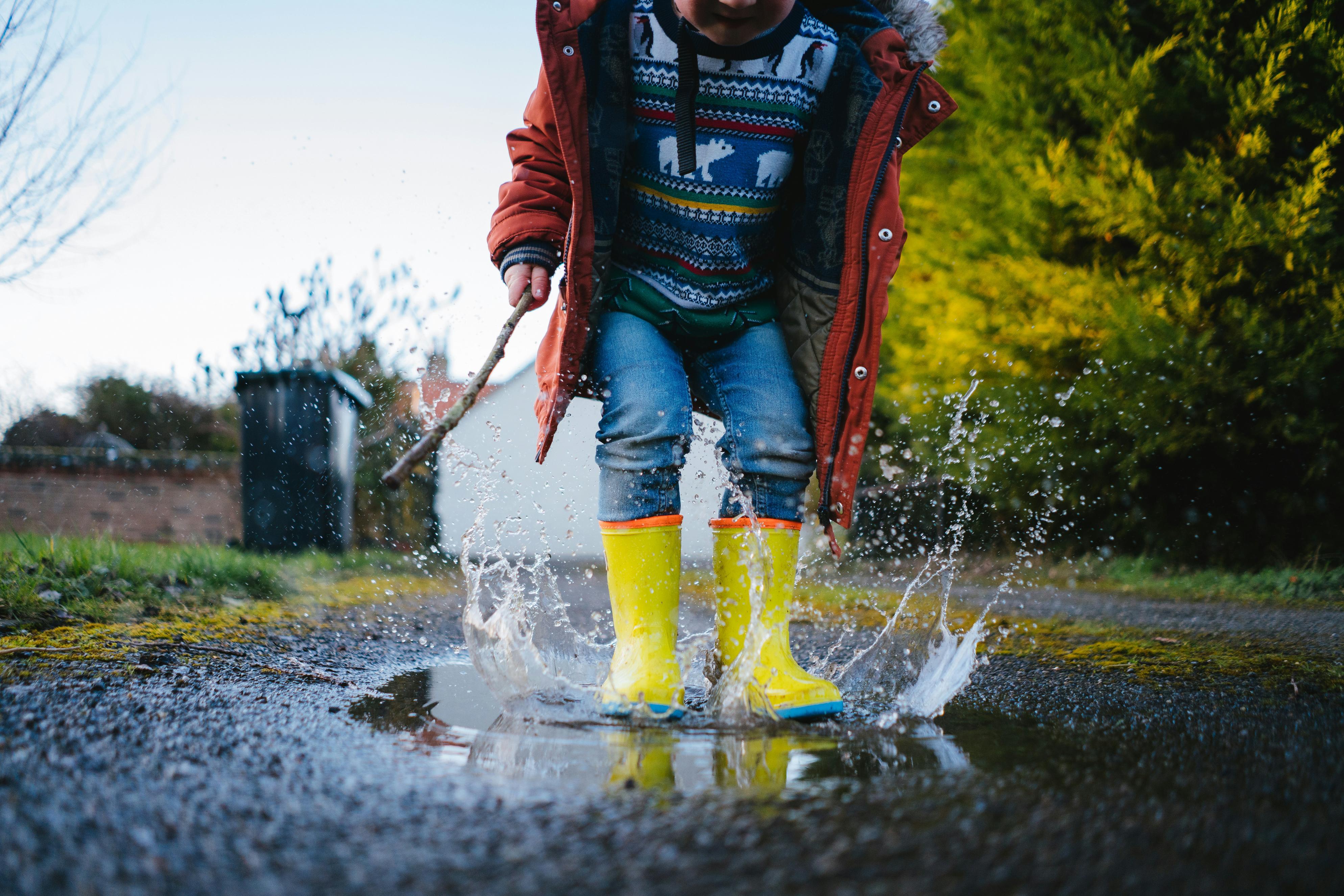
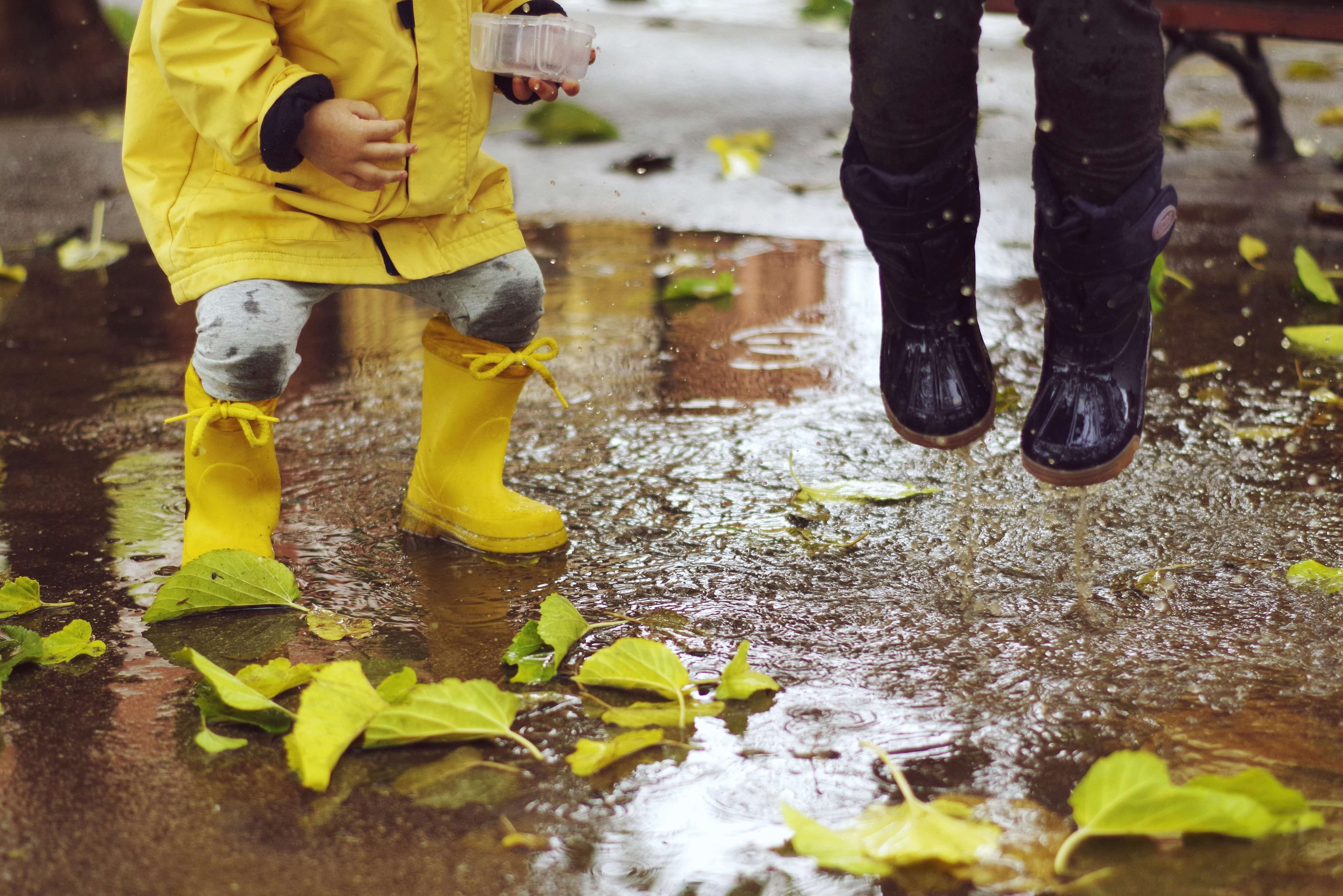
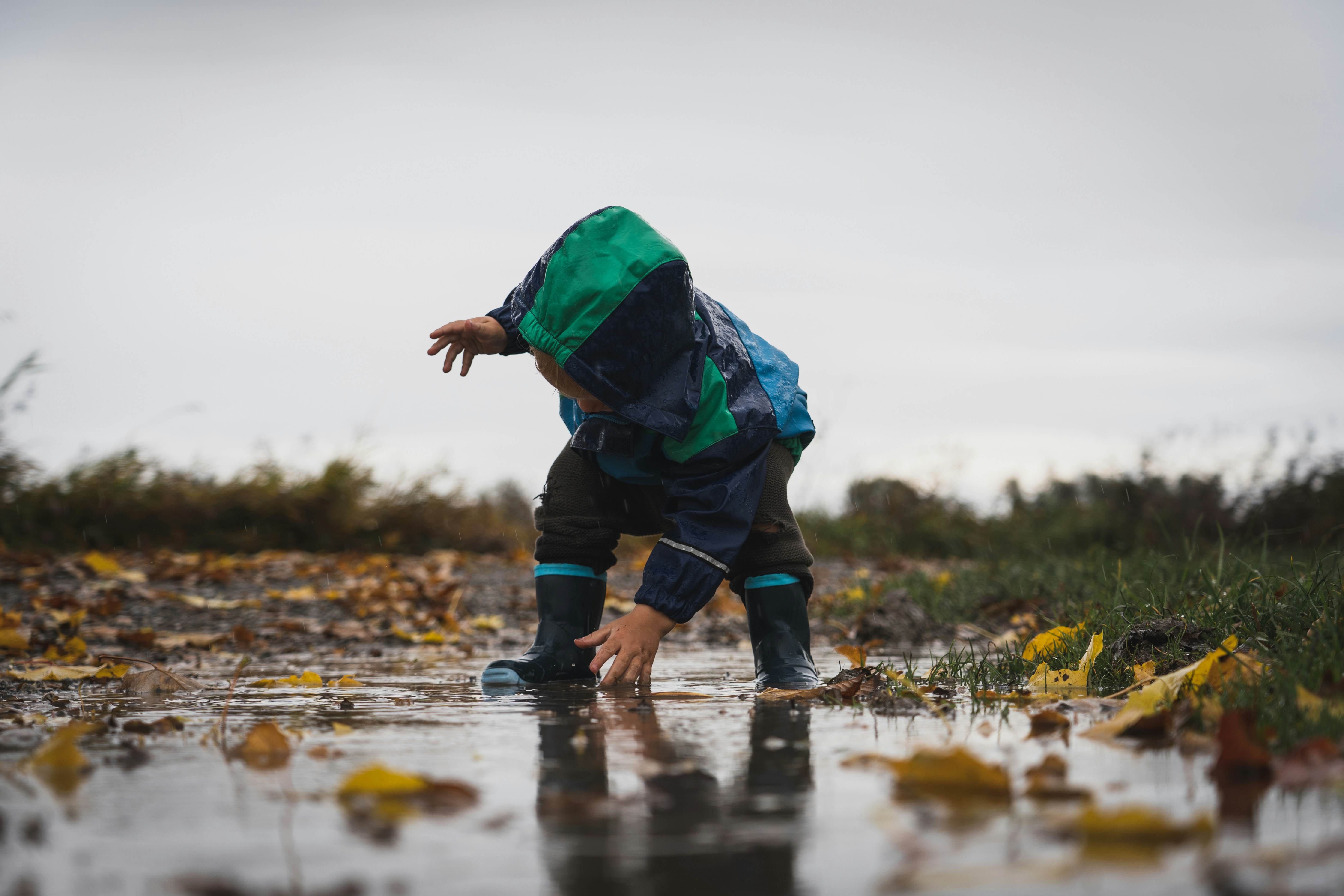
"There's no such thing as bad weather, only unsuitable clothing." It's a saying you may have heard, but it takes on new meaning when you watch tamariki laughing in the rain, splashing through puddles, and discovering the world around them.
The outdoors is an extension of a child's learning environment—every season, every forecast, every day.
Rain doesn't stop children's curiosity. In fact, it often sparks it.
Gear-up for the Adventure
The key to enjoying wet-weather play is simple: the right clothing. And that goes for you too whānau!
When children, and parents, are comfortable and warm, they can focus on fun and exploration. Having a few essential pieces of waterproof gear makes all the difference:
Waterproof pants or overalls keep clothes clean and dry while children crawl, climb, kneel, and splash.
Gumboots provide the freedom to stomp through puddles and muddy tracks with confidence.
A waterproof raincoat helps protect against wind and rain while allowing children to move freely.
Warm layers underneath (such as merino or fleece) help regulate body temperature.
A spare set of clothes packed in a waterproof bag means tamariki can head home warm and comfortable after their adventures.
Why Rainy-Day Play Matters
Rain transforms familiar places into exciting new environments. Puddles become lakes, leaves glisten with water droplets, worms emerge, and the sounds, smells, and textures of nature change.
These experiences provide countless opportunities for learning.
Physical Benefits
Outdoor play in all weather encourages children to:
Build balance and coordination while navigating slippery or uneven surfaces.
Strengthen muscles through climbing, running, lifting, and jumping.
Develop resilience as they adapt to changing conditions.
Improve overall hauora through active movement rather than sedentary indoor play.
Simple activities like jumping in puddles help strengthen gross motor skills and body awareness.
Cognitive Benefits
Rainy weather also creates unique opportunities for thinking and learning.
Children naturally begin asking questions:
Where does the water come from?
How do puddles diappear?
Why do worms come out when it rains?
Which objects float, and which sink?
These moments nurture:
Scientific thinking through observation and experimentation.
Problem-solving as children navigate changing environments.
Creativity and imaginative play using natural materials.
Language development through conversation, storytelling, and describing what they notice.
Nature is constantly changing, and rainy days offer lessons that simply can't be replicated indoors.
Building Confidence Through Nature
Experiencing different weather conditions helps children develop confidence and adaptability. They learn that being outside isn't only enjoyable when the sun is shining.
Instead, they discover that every season has something unique to offer. When tamariki are supported to safely experience wind, rain, mud, and changing temperatures, they develop a greater understanding of te ao - the natural world—and confidence in their own abilities.
Helping Children Love the Outdoors
You can encourage this mindset at home too.
The next time rain arrives, consider putting on gumboots instead of staying indoors. Take a short walk, splash in a few puddles, look for insects, collect interesting leaves, or simply listen to the sound of the rain as it falls on different surfaces.
These simple moments often become the memories children treasure most.
At PerVigeō, we don't see rainy days as interruptions to learning—they're invitations to explore, discover, and grow. With the right clothing and an adventurous spirit, every forecast offers something worth experiencing. There's a whole world waiting just outside the door.
How PerVigeō supports children and families
We offer a safe, non-judgemental space where your family is welcomed by people who understand. Our team partners with you to explore your child’s unique strengths and challenges and to create a personalised plan for support.
Whether you’re looking for reassurance, advice, or formal assessment, we’re here to help.
Better together
Together, we’ll take the next steps toward helping your child reach their full potential.